Closing the loop
Cork & Capture enables producers to eliminate purchased CO₂, generate new revenue, and lead the industry in sustainability — all through a compact, mobile, and flexible system.
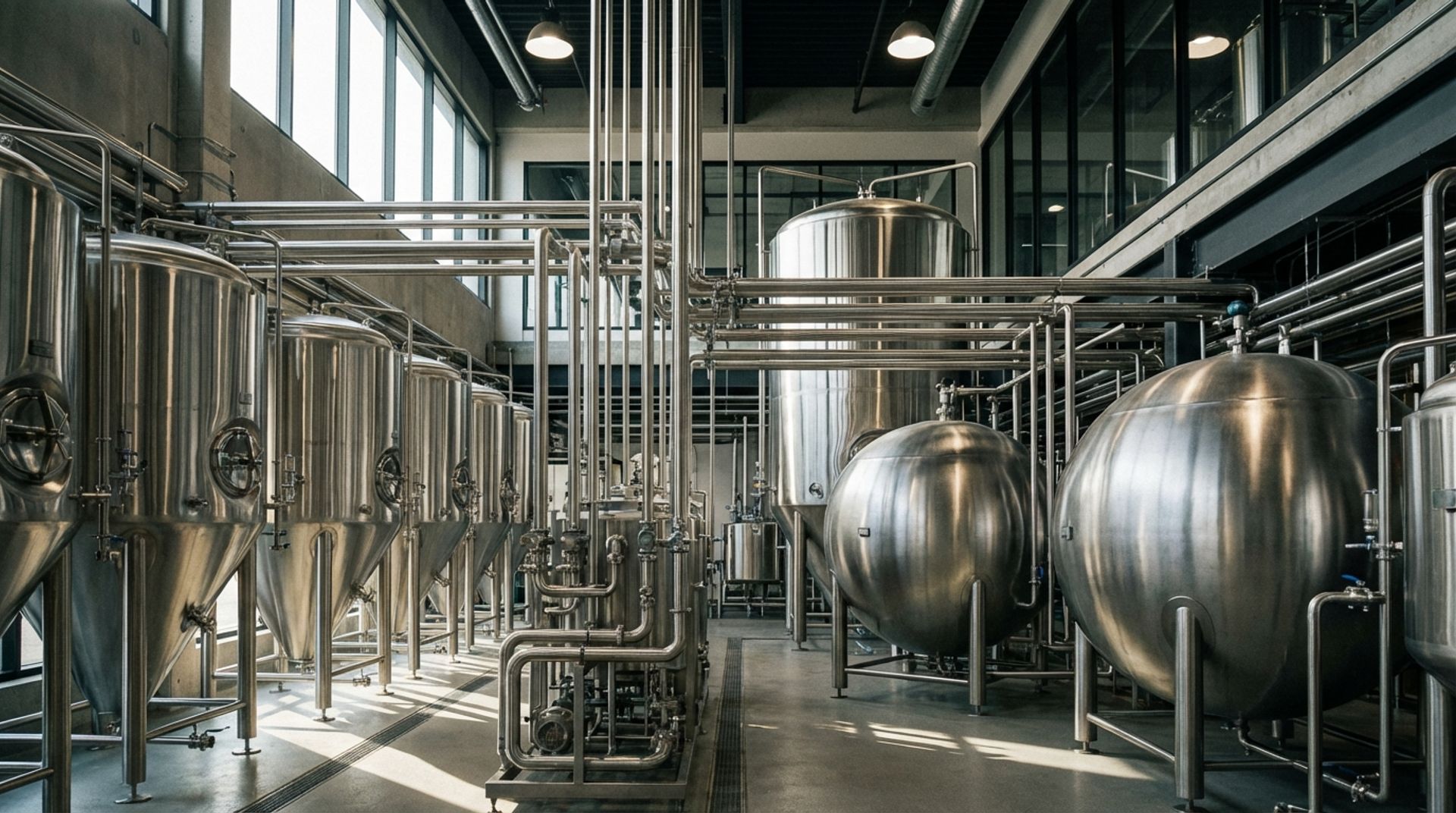
Cork & Capture enables producers to eliminate purchased CO₂, generate new revenue, and lead the industry in sustainability — all through a compact, mobile, and flexible system.
Carbon capture explained
Carbon capture sits in a thicket of acronyms — CCS, CCUS, small-scale CCUS, biogenic capture — and it's worth being clear about which one Cork & Capture is, and why. Here's the layer cake of terminology, with the drinks-industry lens at the bottom.
Carbon capture and storage (CCS) is the established industrial term for capturing CO₂ at a point source and storing it underground, typically in depleted oil and gas reservoirs or deep saline aquifers. CCS is predominantly applied to fossil-fuel point sources: cement kilns, steelworks, fertiliser plants, gas-fired power generation. The UK has a portfolio of large-scale CCS pilots underway — HyNet, the East Coast Cluster, the Acorn project — designed to capture millions of tonnes per year from heavy industry. These are billion-pound infrastructure projects with timescales measured in decades. Cork & Capture sits in a related but different category: small-scale, biogenic, modular.
Carbon capture, utilisation and storage (CCUS) adds the "utilisation" component to the CCS picture. Instead of capturing CO₂ purely to bury it, CCUS captures CO₂ and finds something productive to do with it — feed it back into another industrial process, turn it into a chemical building block, or sell it for use elsewhere. The utilisation pathway is the closer cousin of what Cork & Capture actually does: on-site capture, on-site reuse for carbonation and blanketing, and surplus routed to permanent storage or facilitated resale. The economics of CCUS improve dramatically when the captured CO₂ has a paying customer at the gate — which, for a brewery or winery, means itself.
Traditional CCUS economics required industrial scale — million-tonne-per-year facilities serving cement plants and refineries. The minimum economically viable size shut out anyone smaller than a major industrial site. Small-scale CCUS for the drinks industry changes that picture: modular, portable systems make capture viable for an individual brewery or winery. Cork & Capture installs on a single fermentation vessel, captures the biogenic CO₂ a producer would otherwise vent, and supplies it back for on-site use — carbonation, sparging, press inerting, tank blanketing. This is small-scale CCUS in practice: industrial chemistry applied to a brewery- or winery-sized operation, on a monthly subscription rather than a billion-pound capex.
Biogenic CO₂ comes from a living source. In fermentation, yeast converts sugars to alcohol and CO₂ — the carbon was atmospheric a year ago (sugar came from photosynthesis in this season's grapes, barley or apples), so re-emitting it back into the atmosphere is short-cycle. It nets to roughly zero on a climate timescale. Fossil CO₂ from an ammonia plant or a cement kiln is long-cycle: that carbon was locked underground for tens to hundreds of millions of years, and burning it adds net-new CO₂ to the active carbon cycle. The distinction matters for carbon credit eligibility (only biogenic capture qualifies for Verra-certified biogenic carbon credits), for ESG reporting, and for your buyer-facing sustainability story. Biogenic CO₂ capture isn't just an emissions reduction — it's a category of credible carbon removal.
Process
All equipment is integrated into a compact mobile platform. Here's the six-stage process that turns your fermentation CO₂ into a valuable resource.
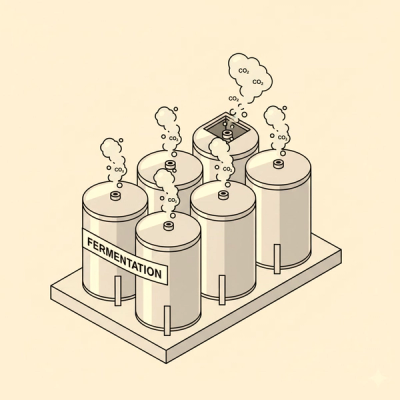
Removes foam, liquid, and entrained solids from raw fermentation CO₂.

Drops temperature from 15°C to −30°C to remove water and volatiles.

Silica gel bed removes moisture; CuO guard bed removes sulfur species.
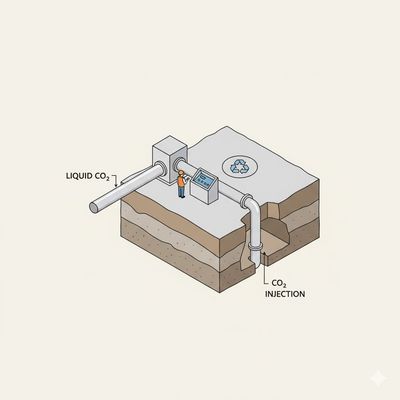
Multi-stage compression to 20–25 bar.
Final condenser cools CO₂ to −20°C saturation and −25°C subcooling.
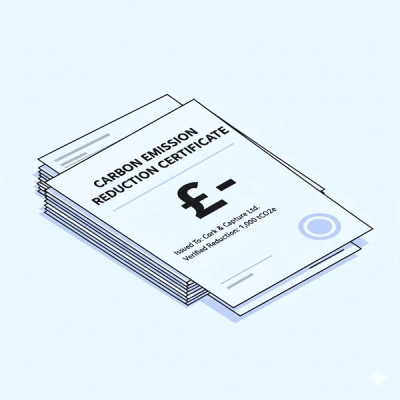
Provided separately based on customer's CO₂ deployment pathway — onward sale, on-site reuse, or permanent removal.
Removes foam, liquid, and entrained solids from raw fermentation CO₂.
Drops temperature from 15°C to −30°C to remove water and volatiles.
Silica gel bed removes moisture; CuO guard bed removes sulfur species.
Multi-stage compression to 20–25 bar.
Final condenser cools CO₂ to −20°C saturation and −25°C subcooling.
Provided separately based on customer's CO₂ deployment pathway — onward sale, on-site reuse, or permanent removal.
Scroll to explore each step
Solutions
Built for wineries, breweries, distilleries, cider makers, and commercial alcohol producers.
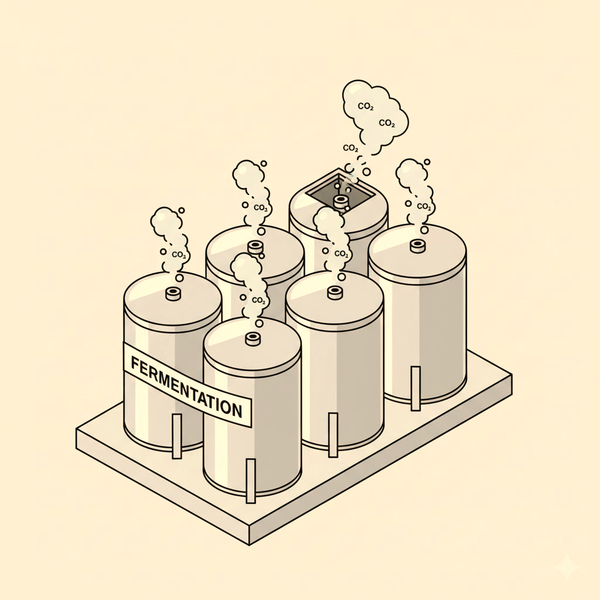
For Wineries
Capture fermentation CO₂ with precision. Seasonal deployment — onsite only during fermentation.
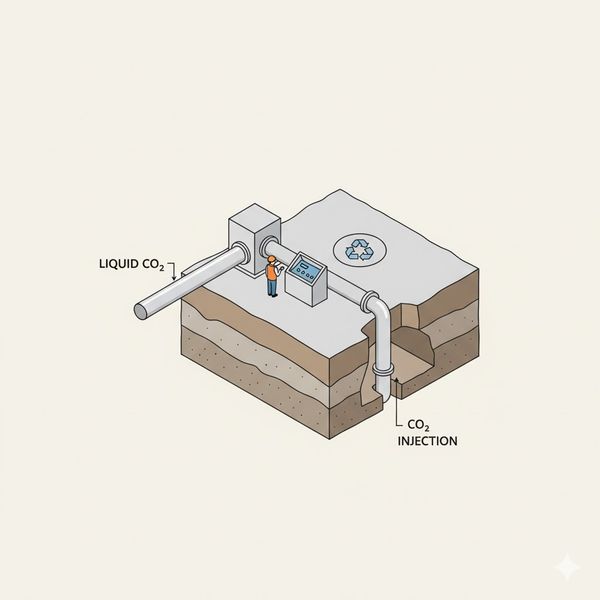
For Distilleries
Harness natural CO₂ release during the spirit making process. Year-round deployment for continuous production.

For Breweries & Cider Makers
Designed for breweries, cider makers, and commercial alcohol producers. Year-round deployment for continuous operations.
Portable & flexible
Our fully portable, modular CO₂ recovery system is designed to go where you need it — no permanent infrastructure required.
Entire system fits on a single vehicle
Onsite only during fermentation for wineries
For breweries, distilleries, and commercial producers
No large upfront CAPEX — offered on subscription
Optional expansion for higher capture volumes
Configured for onward sale, on-site reuse, or permanent removal
Technical

99.99%
Up to 30 tonnes/day
Ethanol, methanol, esters, H₂S, moisture
~130 kg water removal
75–100 kg/h
20–25 bar multi-stage
Partner with us
Join our pilot programme and be among the first producers to capture, reuse, and monetise your fermentation CO₂.
Flexible commitment, no long-term lock-in
We set up and configure everything for you
Showcase your sustainability credentials
Real-time system performance tracking
Continuous improvement of capture efficiency
We find local buyers for your surplus CO₂
Available as soon as certification is in place
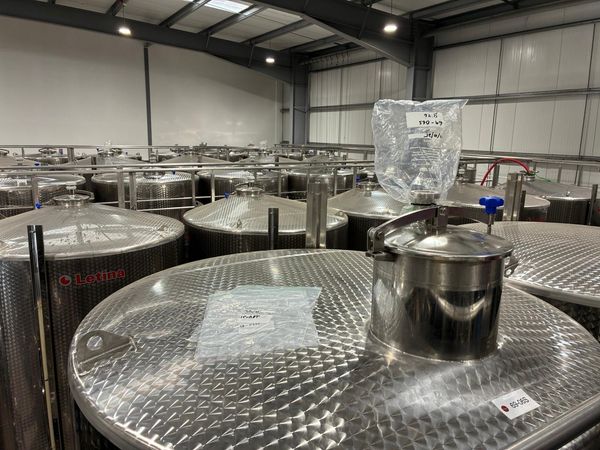
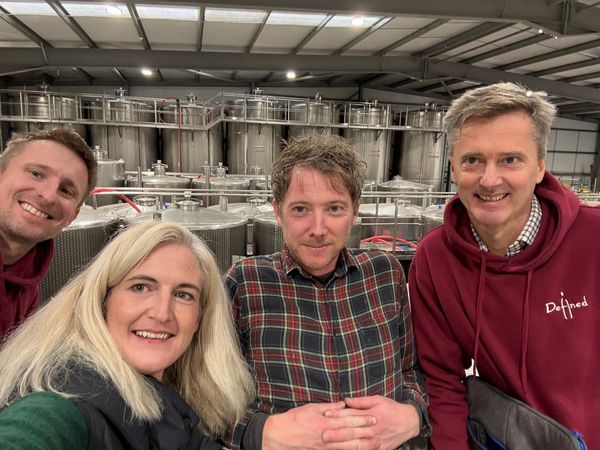
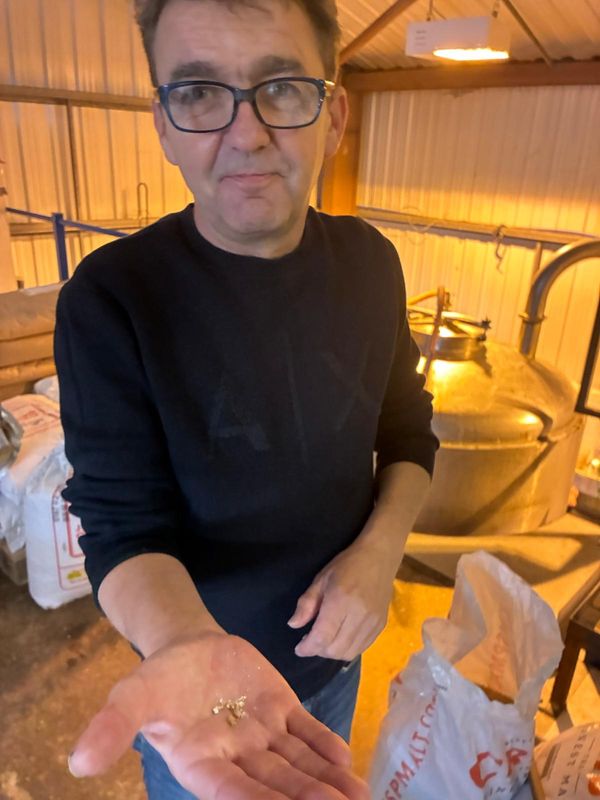
Real installations, real results. Here's Cork & Capture at work in breweries and wineries across Kent and Sussex.
Everything you need to know about capturing, pricing, and carbon credits.
